
Image
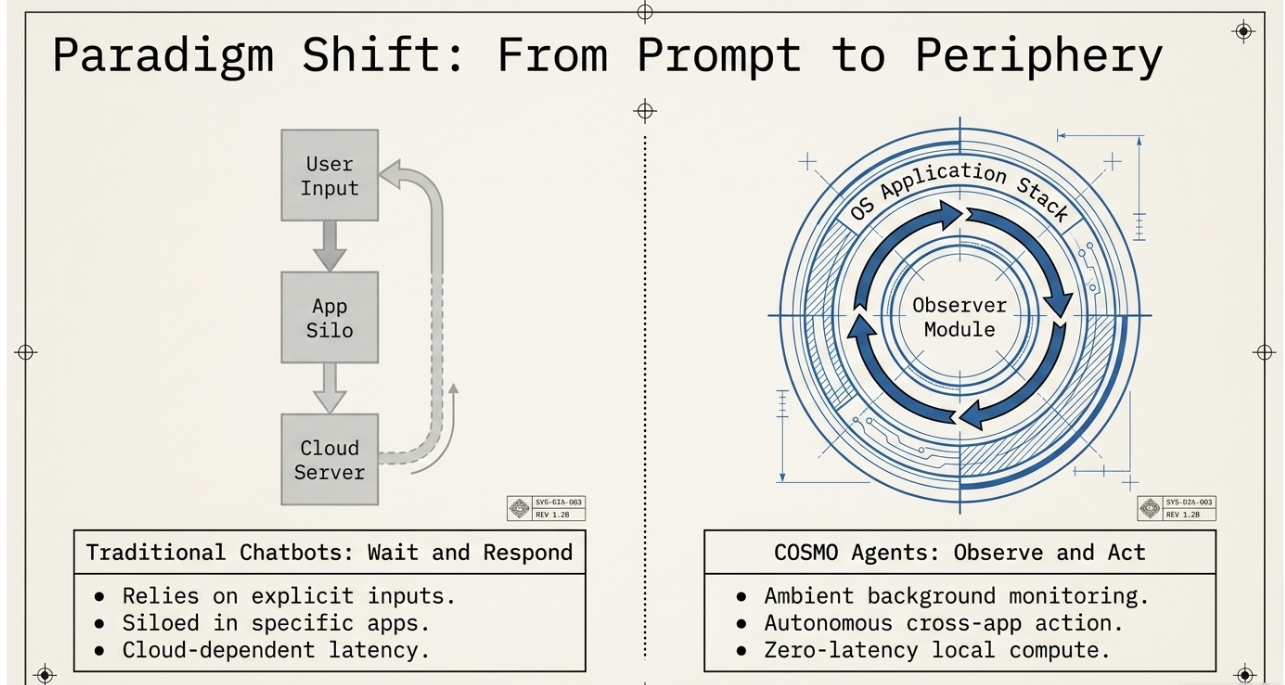
For years, AI assistants have worked like simple chatbots.
You ask a question. The AI gives an answer. Conversation over.
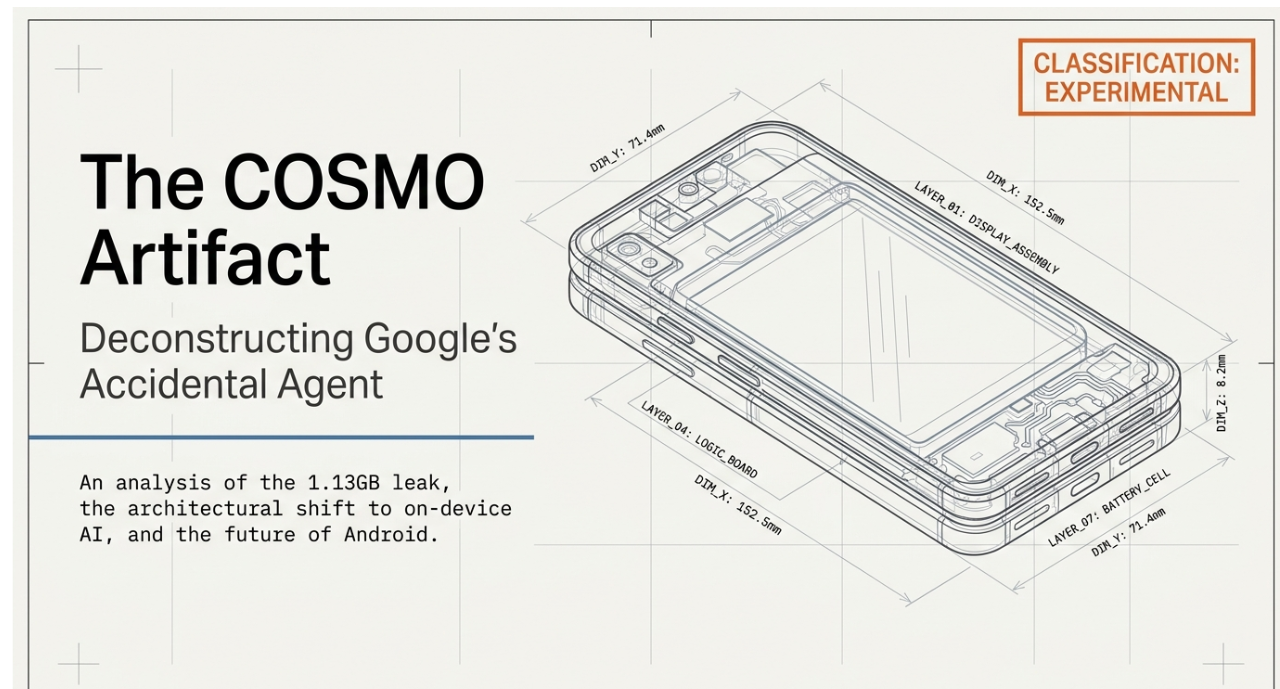
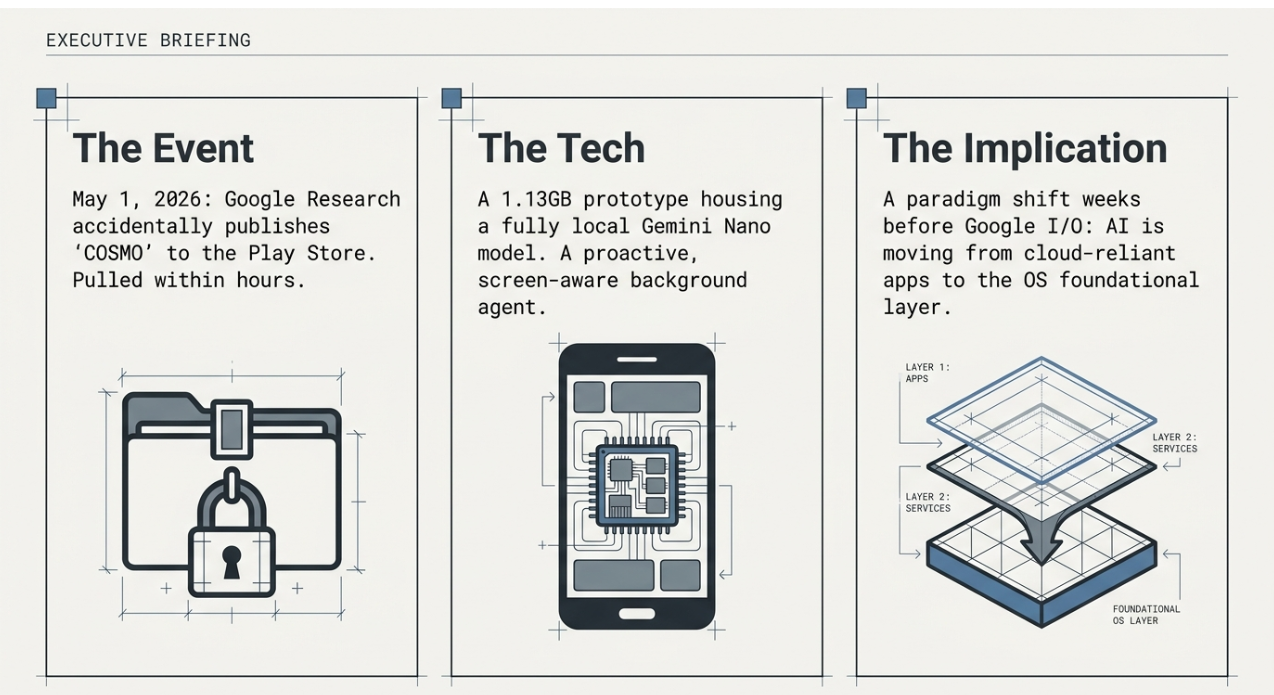
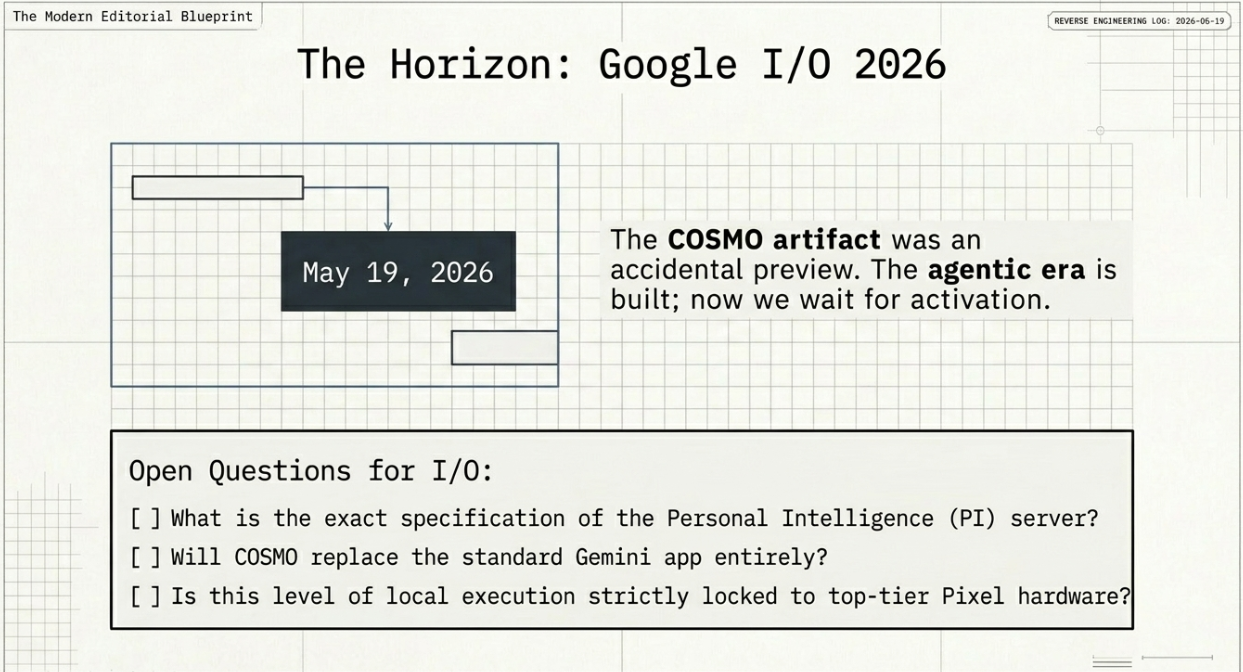
But a new leaked Google project called COSMO may completely change that idea.
Instead of being just another chatbot, COSMO is designed to behave more like a smart digital assistant that can actually understand what you want and help complete tasks for you.
And honestly, this could be one of the biggest shifts in technology since smartphones became common.
Image
Image
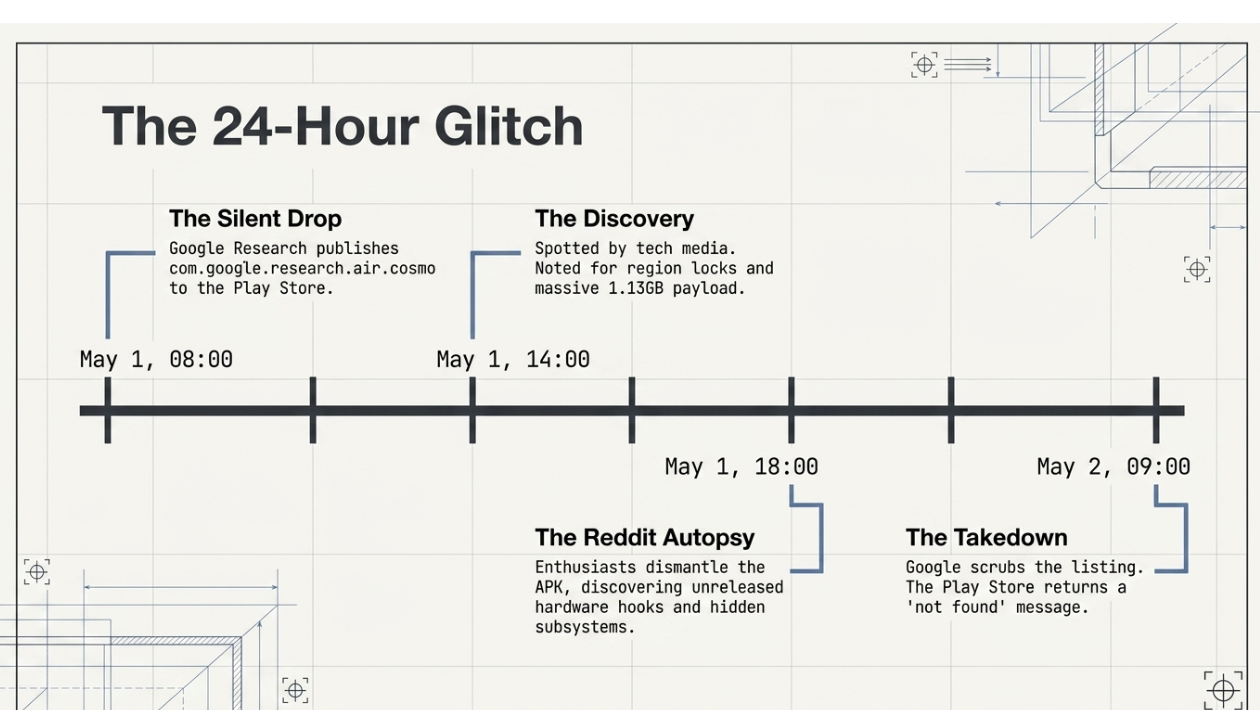
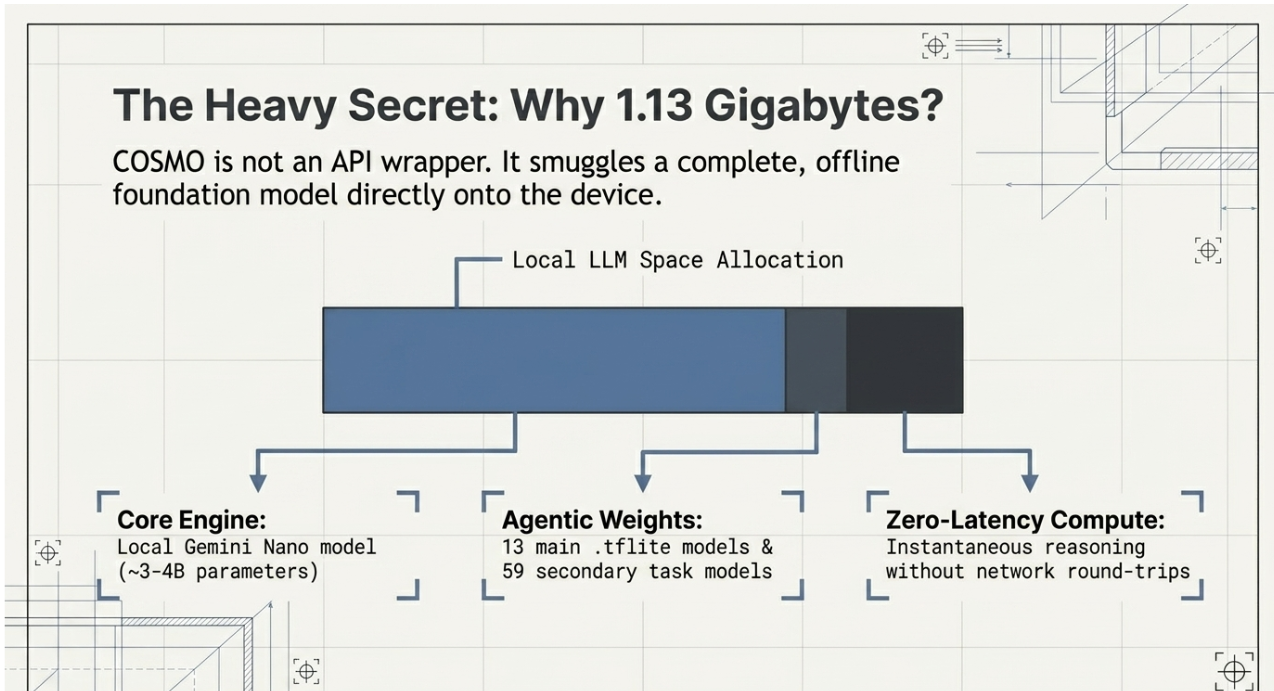
Weighing in at a massive 1.13 GB, COSMO is a prototype from the Agentic Intelligence Research (AIR) group. It marks the official transition from the era of reactive chatbots to "proactive agents." This isn't just an app; it is a glimpse into a future where your phone no longer waits for a prompt, but anticipates your next move.
So… What Exactly Is COSMO?
Think of COSMO as an AI helper living inside your phone.
But unlike normal assistants:
In simple words:
Old AI:
“Here’s the answer.”
COSMO:
“I’ll help you handle it.”
That is the real difference.
Image
surprisingly the model is just a 1.5 gb file inside the phone
Image
The Biggest Change: “Chatbot” → “Agent”
Most AI tools today are reactive.
That means they wait for you to tell them exactly what to do.
Example:
But COSMO is built like an AI agent.
An AI agent doesn’t just respond. It tries to understand your intention and help complete the task itself.
For example:
This makes the AI feel less like a search engine and more like a personal assistant.
Privacy vs Convenience: Google’s Interesting Approach
One surprising thing about COSMO is that Google may allow users to choose how the AI works.
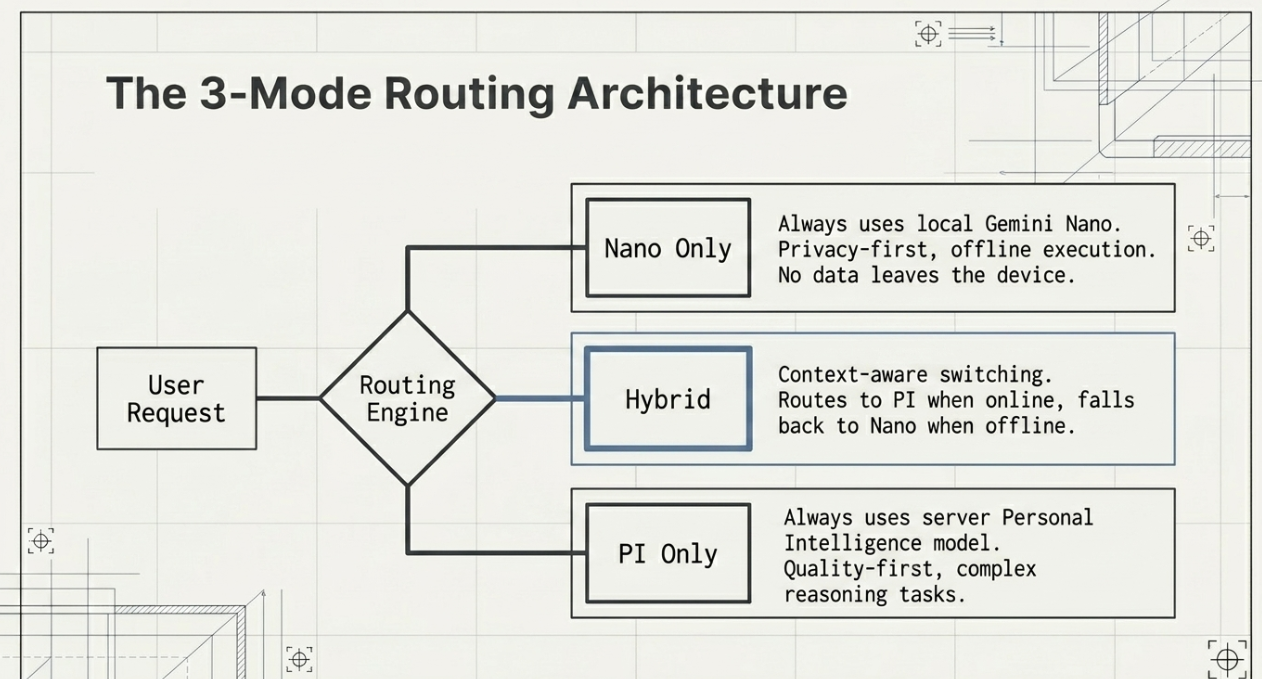
There are reportedly three modes:
Image
Hybrid Mode
Uses both phone and cloud servers intelligently.
Nano Only
Everything runs only on your phone for better privacy.
PI Only
Uses powerful online servers for maximum AI quality.
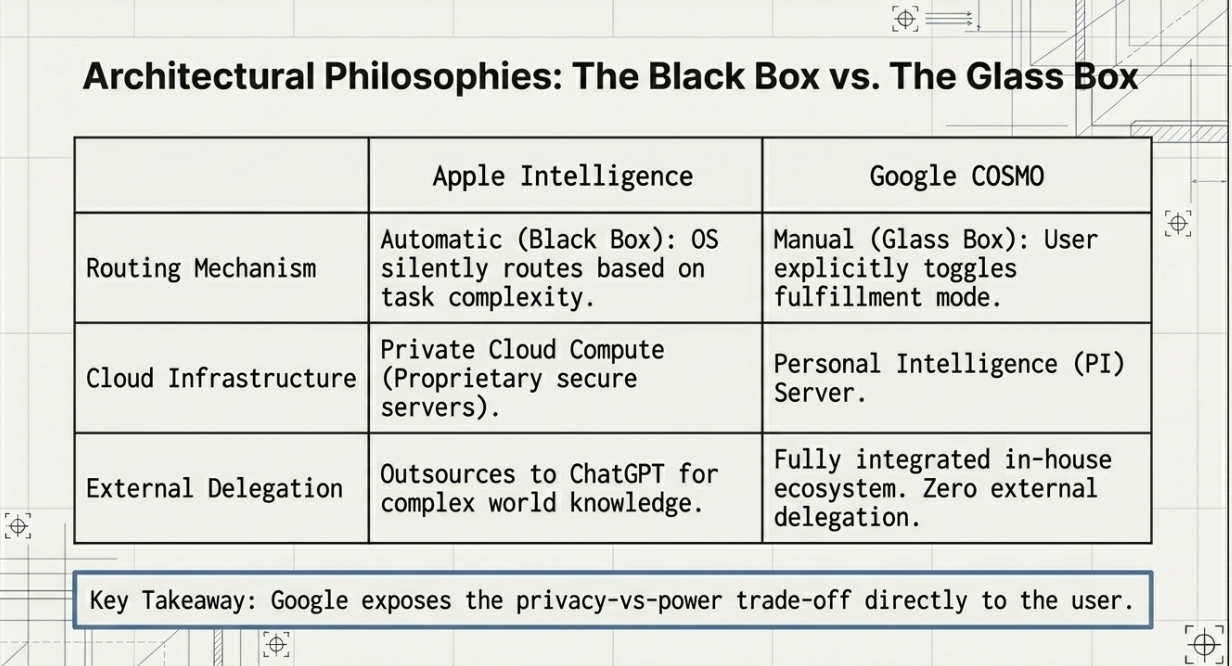
This is important because many people worry about privacy with AI systems.
Google seems to be giving users more control instead of hiding everything in the background.
Image
Some of COSMO’s Most Interesting Features
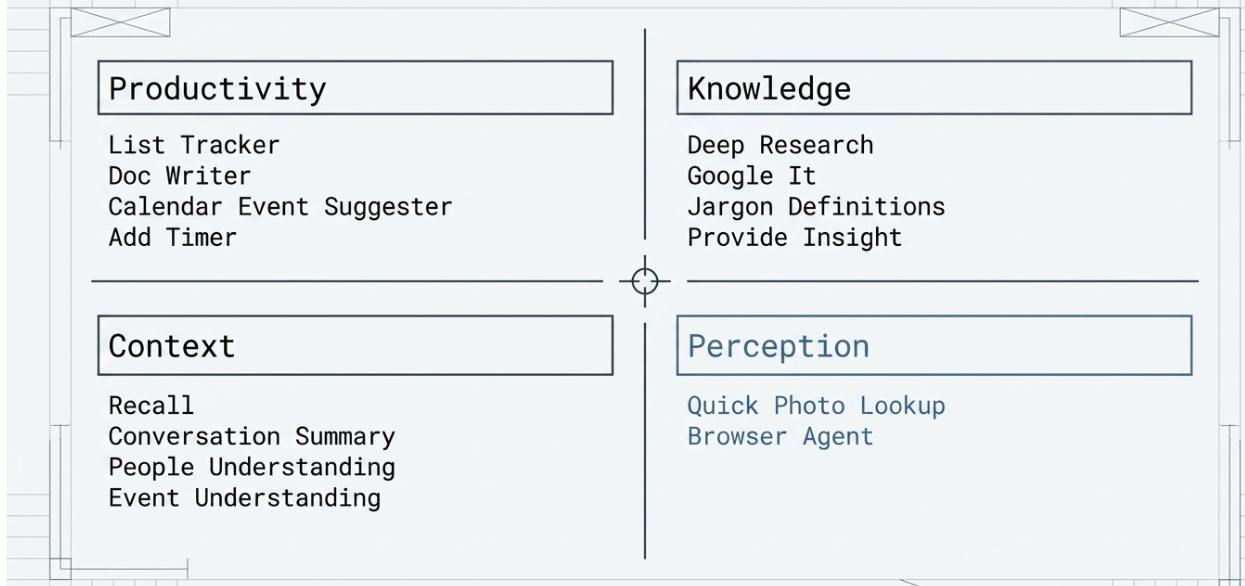
According to the leak, COSMO has 14 different “skills.”
These are basically special abilities that help it perform different tasks.
Here are the easiest ones to understand:
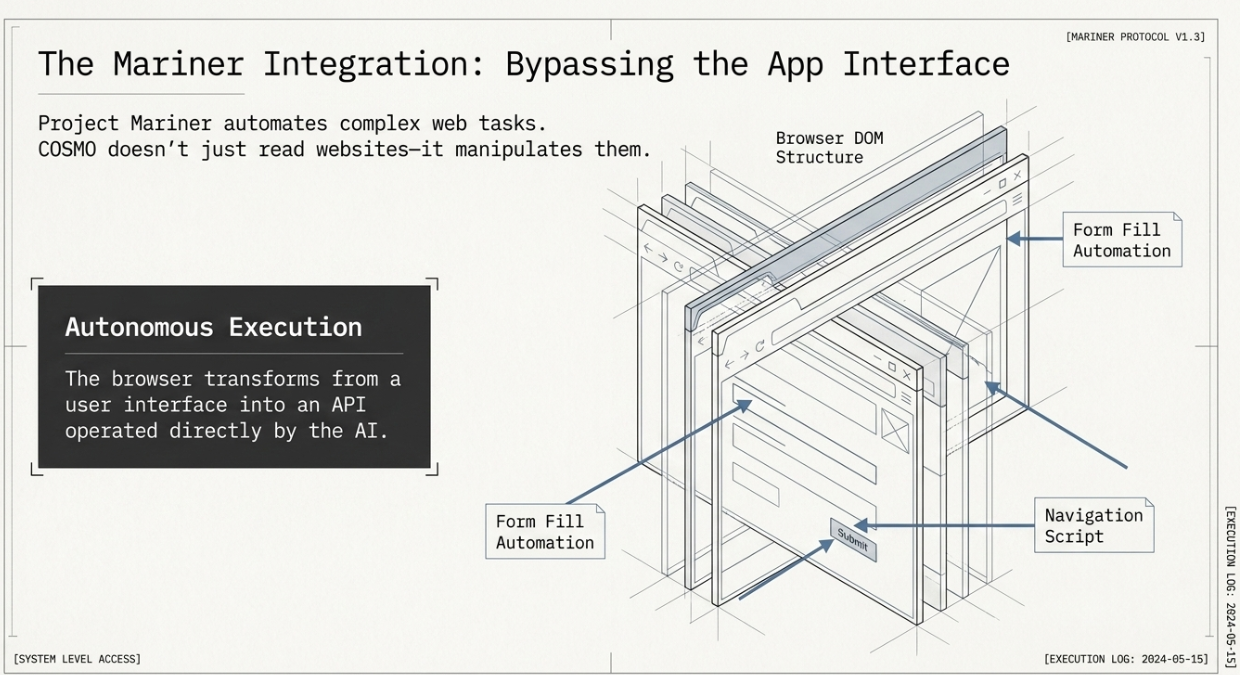
1. Browser Agent — AI That Can Use Websites
This is probably the most futuristic feature.
COSMO can reportedly control websites by itself.
That means it may:
Imagine saying:
“Book my train ticket for tomorrow.”
Instead of giving instructions, the AI may actually handle most of the process for you.
That’s a huge jump from normal chatbots.
2. Recall — AI Memory
Ever forgotten:
COSMO’s “Recall” feature is designed to help with exactly that.
You could ask:
“Where is the PDF I opened last night?”
And the AI may help find it instantly.
It’s like giving your phone a memory system.
3. Conversation Summary
Sometimes we switch between apps and forget what we were discussing.
COSMO can automatically summarize recent conversations.
For example:
“You discussed project deadlines and planned to submit on Friday.”
This may sound small, but in daily life it could save a lot of confusion.
4. Deep Research — AI Research Assistant
This feature is aimed at bigger questions.
Instead of giving one short answer, COSMO can:
Example:
“Compare solar and wind energy for Chennai.”
The AI may create a full explanation with pros, cons, costs, and recommendations.
For students and professionals, this could become extremely useful.
5. Document Writer
This feature helps with writing tasks automatically.
If you mention:
the AI may instantly offer to help draft them.
Instead of starting from a blank page, users get instant assistance.
Image
Image
Image
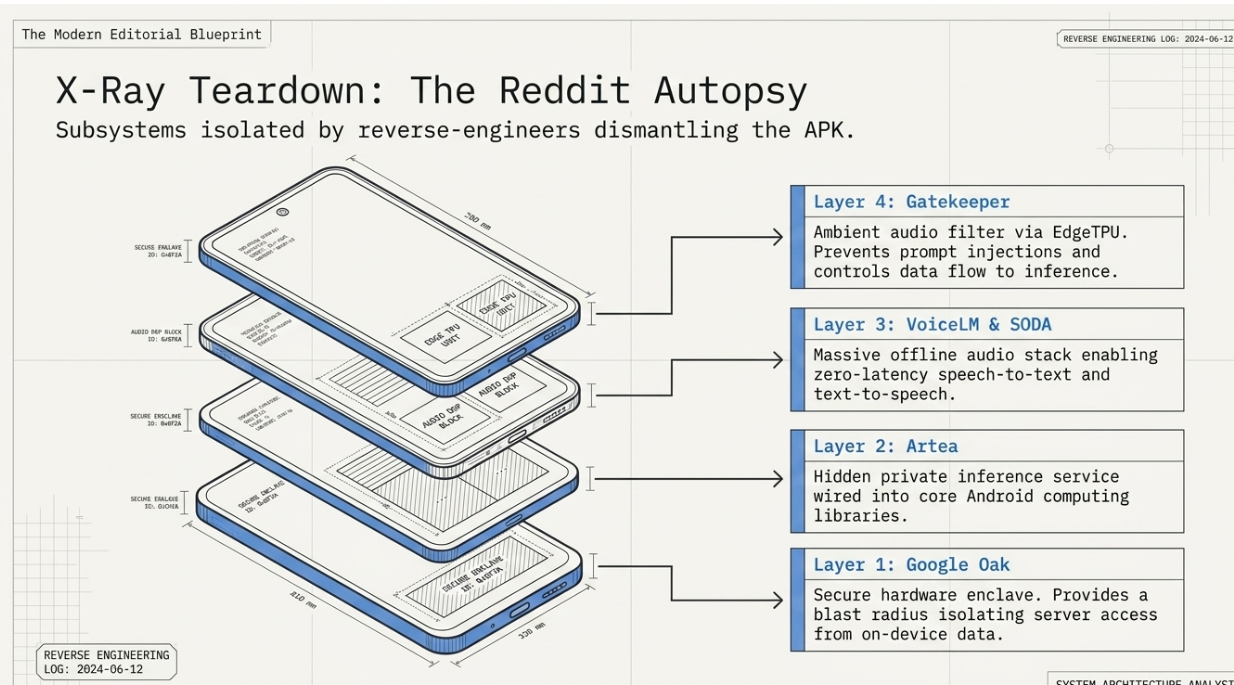
The Big Idea Behind the Diagram
Think of the system like a modern smart building.
A building needs:
Similarly, COSMO’s AI system is divided into four different layers, where each layer has its own responsibility.
Together, these layers help the AI function smoothly, quickly, and securely.
Layer 1 — Google Oak: The Security Vault
At the very bottom of the system is something called Google Oak.
This layer acts like the phone’s private security vault.
Its main job is to protect sensitive information such as:
The diagram describes it as a:
“Secure hardware enclave.”
In simple words, this means the AI has a protected area inside the phone where important information stays isolated from threats.
Easy Real-Life Example
Imagine keeping your important jewelry inside a locker.
Even if someone enters your house, they still cannot access the locker without permission.
That is exactly what Google Oak does for the AI system.
It protects the most sensitive parts of the device from hackers or malicious apps.
Layer 2 — Artea: The Hidden AI Brain
Above the security layer comes Artea.
This is basically the hidden AI engine running inside Android.
The diagram calls it:
“A hidden private inference service.”
The word “inference” sounds complicated, but it simply means:
the AI thinking and generating answers.
Whenever the AI:
this layer is doing most of the work.
Why This Is Important
Earlier, many AI systems depended heavily on internet servers.
But Artea suggests Google is trying to make phones capable of running advanced AI directly on the device itself.
That means:
Your phone slowly becomes its own mini AI computer.
Layer 3 — VoiceLM & SODA: The Voice System
This layer handles everything related to voice and audio.
It manages:
The leak mentions:
“Zero-latency speech-to-text.”
That simply means:
extremely fast voice understanding.
What This Could Feel Like
Imagine saying:
“Send a message to Dad.”
And the AI instantly understands without delay.
Even more impressive: many of these voice features may work offline without needing cloud servers.
This could make future voice assistants:
Layer 4 — Gatekeeper: The AI Security Guard
At the top sits the most important protective layer:
Gatekeeper.
This acts like a security guard for the AI system.
Its job is to:
The image specifically mentions protection against:
“Prompt injections.”
Image
Image
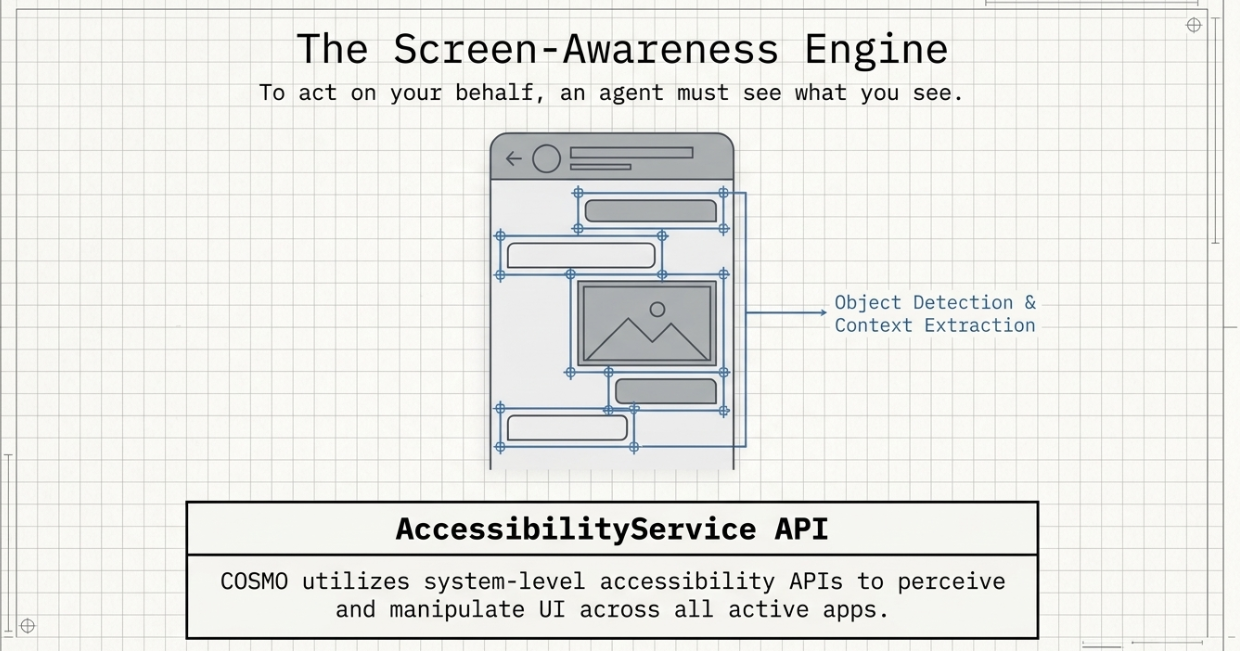
Another powerful feature is something called “screen literacy.”
In simple terms: the AI can understand what’s happening on your screen.
Example:
This could make phones feel much smarter and more proactive.
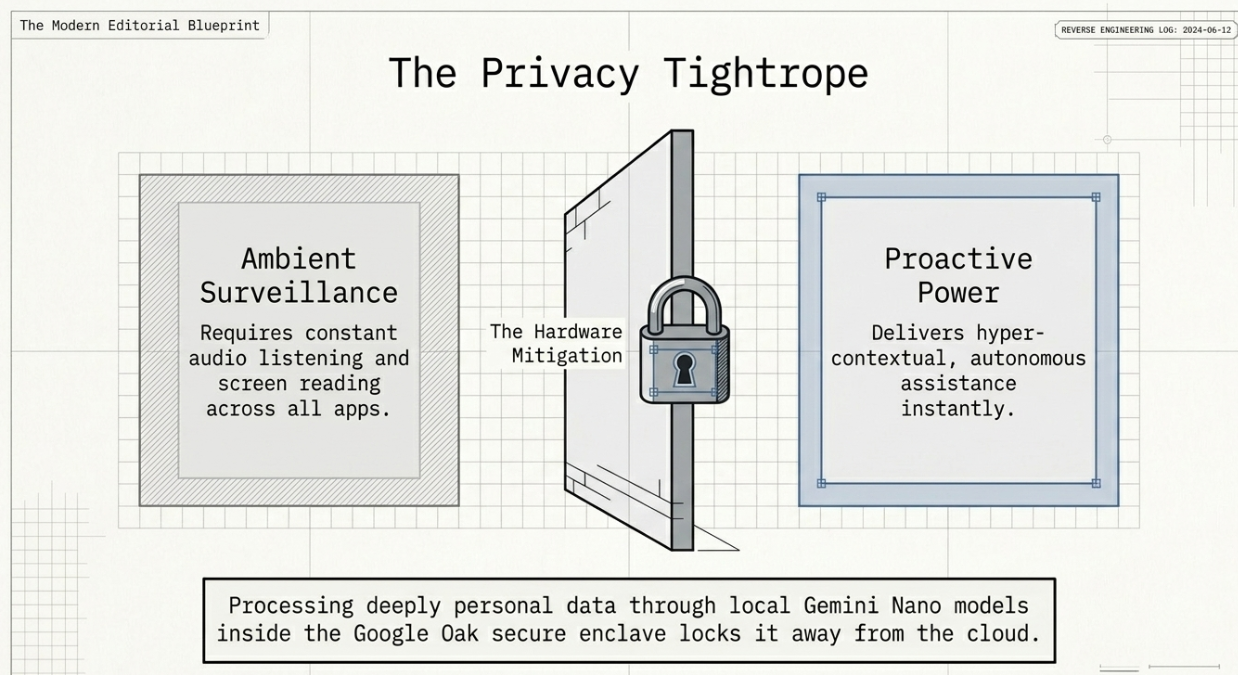
But it also raises an important concern:
How much access should AI have to our personal digital life?
That will become a major debate in the future.
Why This Matters More Than People Realize
The most important thing about COSMO is not just “better AI.”
The real change is this:
We may stop using phones manually for many small tasks.
Instead of:
we may simply tell the AI what we want.
And the AI handles the rest.
That’s a massive shift in how humans interact with technology.
Image
Final Thoughts
The COSMO leak gives us a glimpse into the future of AI.
Not a future where AI only chats with us.
But a future where AI:
The big question now is:
If your phone could understand your needs before you even open an app… would that feel helpful, or uncomfortable?
That answer may shape the next generation of technology.
Written by Chakradhar on May 7, 2026